- Drawings by Brooks Kim
- Posts
- How to Draw a Face from Below — Loomis Method
How to Draw a Face from Below — Loomis Method
What changes when you tilt the Loomis head — and what not to fix.

brooks kim
July 21, 2025
When drawing a face from a low angle, most beginners try to “correct” the silhouette. The jaw feels too wide, the eyes and nose too distorted. But these are the exact cues that make the angle convincing.
Here’s how I build it up using the Loomis method:

Reference photo used for this study.
1. Anchor the ears
In this view, the ears drop lower—both literally and structurally. I always place them at the back-bottom of the sphere. This locks in the perspective and keeps the whole construction grounded.
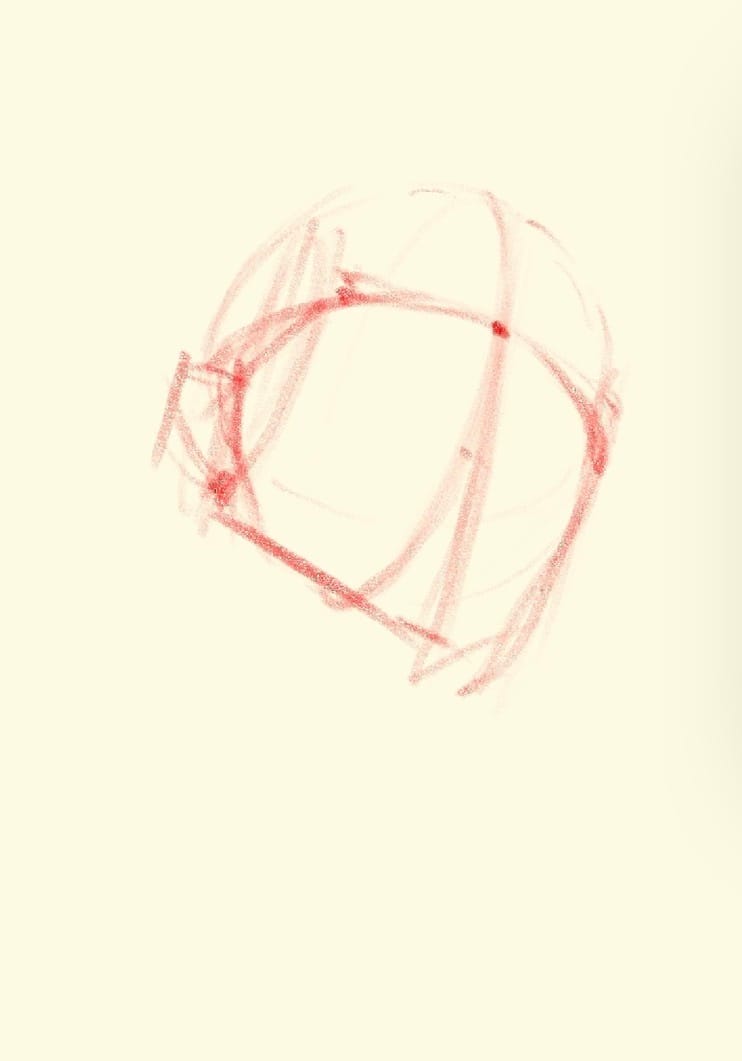
Loomis ball with centerlines and ear anchor points
🧠 Don’t guess ear height. Use the back of the head as your reference.
2. Stretch the space
The area beneath the nose and the eyelid gets exaggerated. If you don’t show it, the head flattens out. Emphasizing that stretch—even more than it feels right—makes the perspective work.


Facial structure with extended nose base and eyelids
📍 This is where most drawings collapse: too safe, too symmetrical.
3. Embrace the silhouette
The jaw will look wide. Let it. Most people try to trim it down, but that just flattens the form. If you’re nervous, let shadows define the edges instead of adjusting the line.
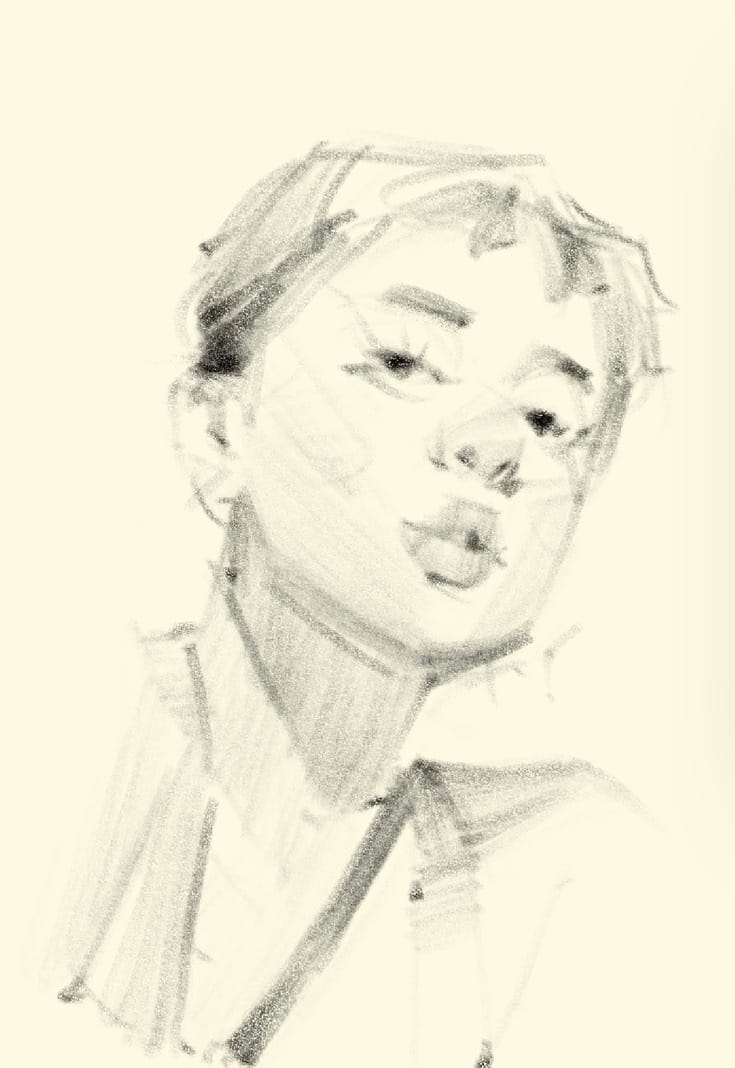
Silhouette shaping with early tone placement
✏️ You’re not drawing a diagram. Let light shape the structure.
4. Build with shadows
From this angle, structure comes from shadow shapes more than outlines. I block in large light/dark areas before adding facial details like the lips and curls in the hair.
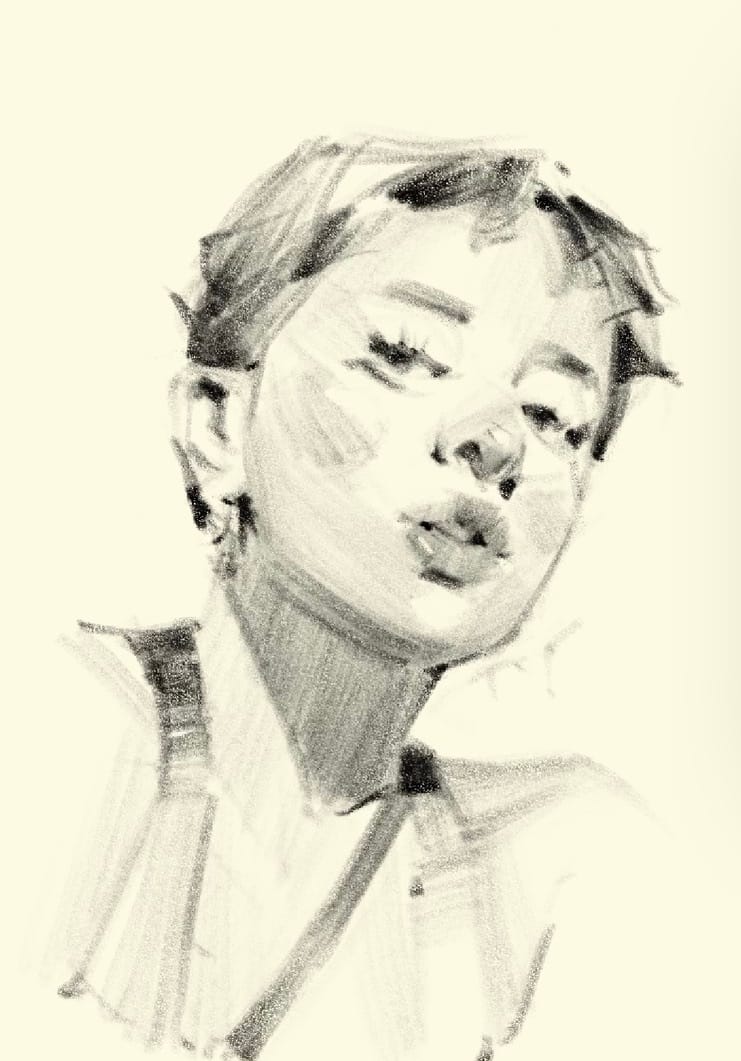
Form built with bold shadows and subtle curls

Facial refinement and edge adjustment

Finished portrait with detail and texture
👁️🗨️ Even a short haircut can express curl and volume at the end.
P.S.
This piece was drawn entirely using my custom Pencil Sketch Brush — designed to keep the structure visible while sketching lightly.
Try rotating the Loomis ball and anchoring the ears lower; you’ll see how naturally the rest falls into place.
Have questions or thoughts? Just hit reply — I’d love to hear how your version turns out.
Thanks for reading,
Brooks