- Drawings by Brooks Kim
- Posts
- Still shading with diagonal lines?
Still shading with diagonal lines?
Stop losing half of your lines' potential. Master the "Logic of Carving."

brooks kim
April 14, 2026
Hello, Artists!
When you need to shade an area, do you catch yourself habitually drawing diagonal lines just to fill the space? If your only goal is to make an area dark, the direction doesn't matter.
But if you are only using lines to fill empty spaces, you are missing out on half of what your lines can actually do. A single line is a powerful tool that can simultaneously explain shading, form (curves), and texture.
🥫 Lines that Explain Form: The Lying Cylinder
Imagine a lying cylinder. If you had to shade it, which way would you draw your lines? Most of you would instinctively choose horizontal curved lines that wrap around the cylinder.
Why? It’s not just because it’s comfortable for your hand. We instinctively know that these lines perfectly show how much the surface curves. By packing lines tightly where the plane turns sharply and spacing them out on the flat front, you can explain both the shadow and the 3D structure at the same time.
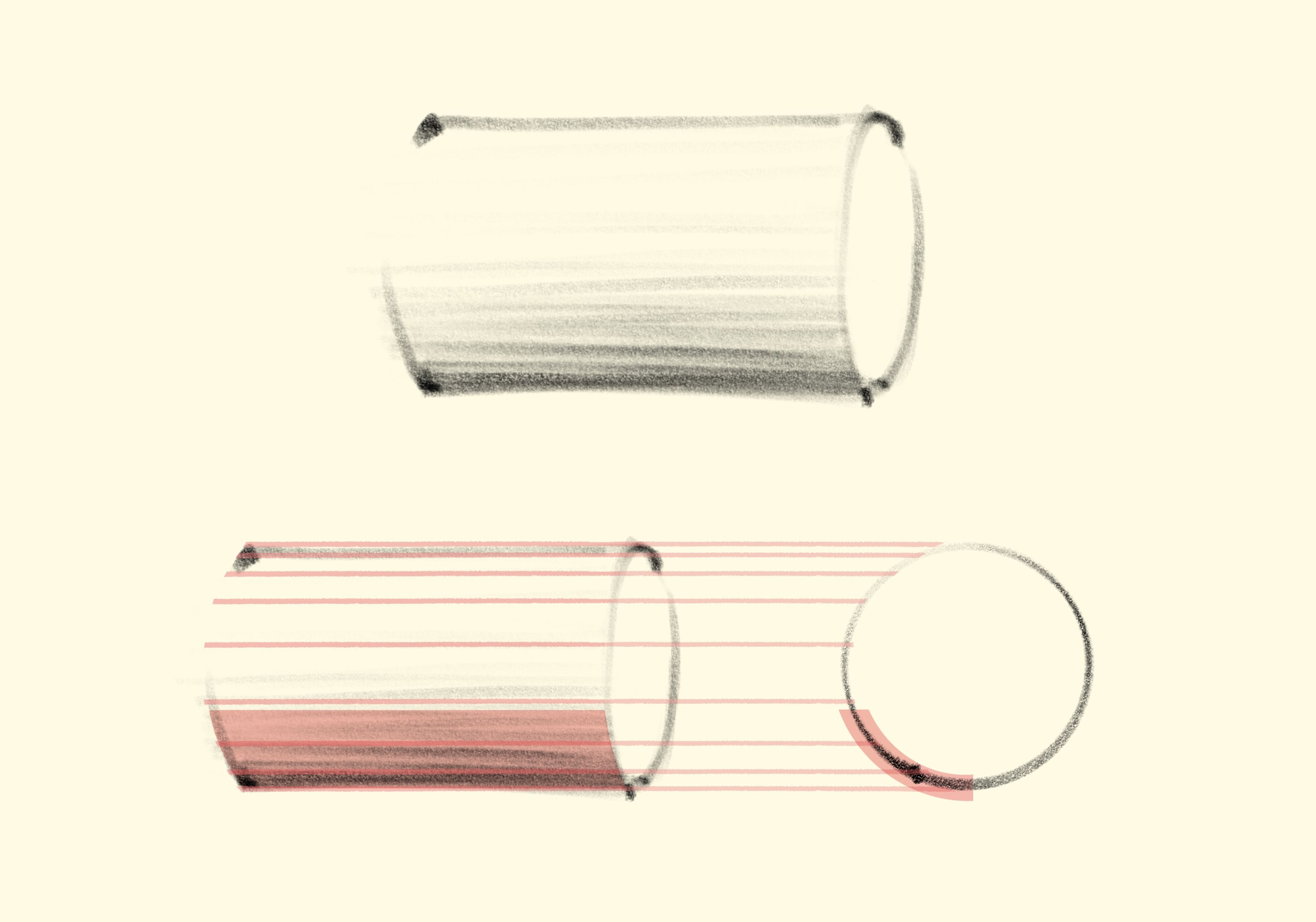
Lines that wrap around the cylinder explain both the "shadow" and the "curvature of the plane" simultaneously.
🔪 The Answer for Complex Shapes: "Carving"
But what if the shape is a squashed ball or a highly complex form? It’s easy to get confused about which direction is correct.
When in doubt, remember this one rule: "Imagine you are carving this form with a sculptor's knife."
The direction where you can push the blade most smoothly is the main "grain" that defines the form. When you draw long lines following this grain, a single line acts like a rope firmly binding the shape from start to finish, creating massive volume.
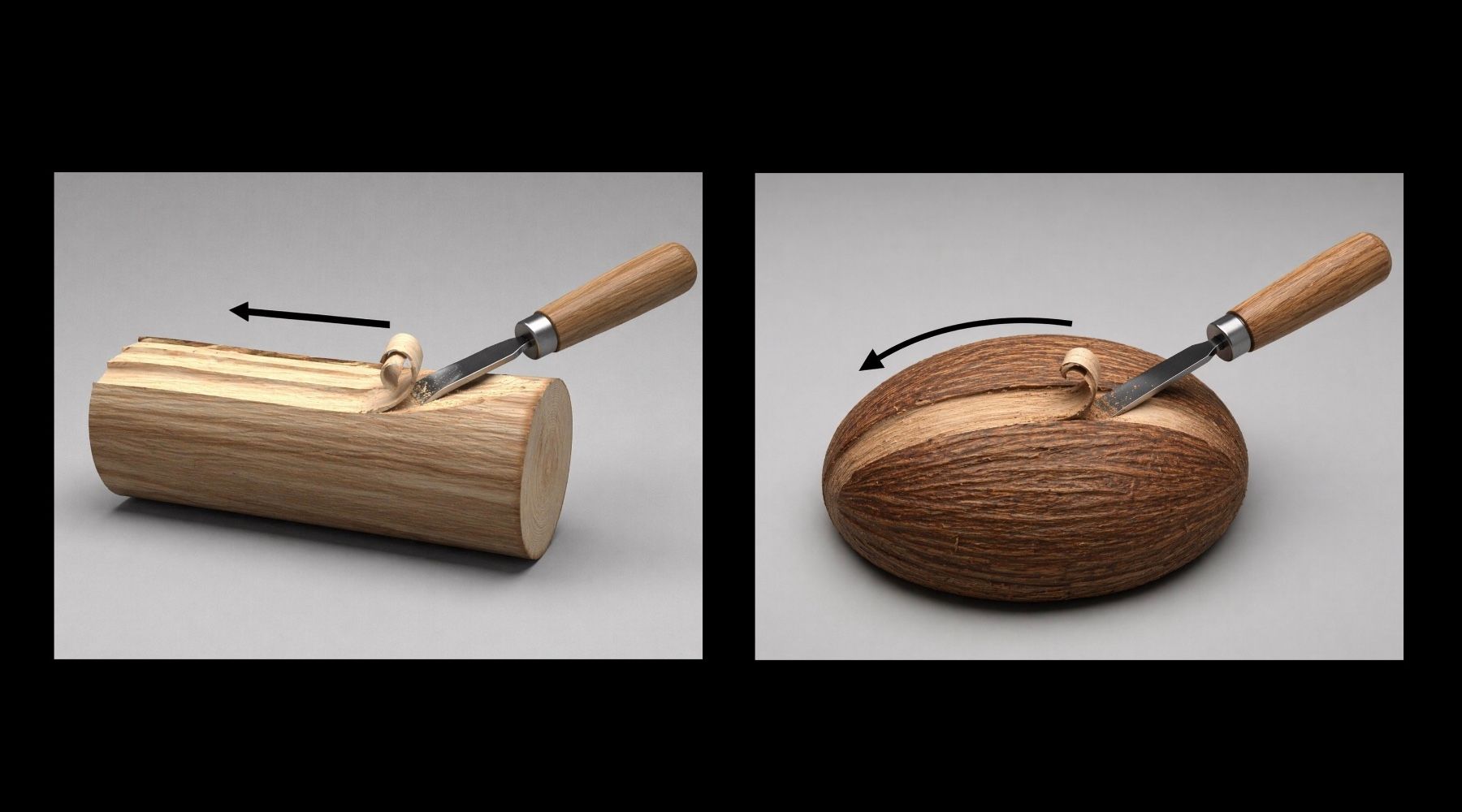
The smoothest path for a carving knife becomes the defining "grain" of the form.
⚡ Intentional Tension: Constricting the Form
When the goal of your drawing is "Tension," the technique shifts. Some artists intentionally draw lines that constrict the form—like wrapping thick rubber bands around a bursting balloon—to express the explosive energy of a muscle. These crossing lines inject thrilling visual tension and power into the drawing.
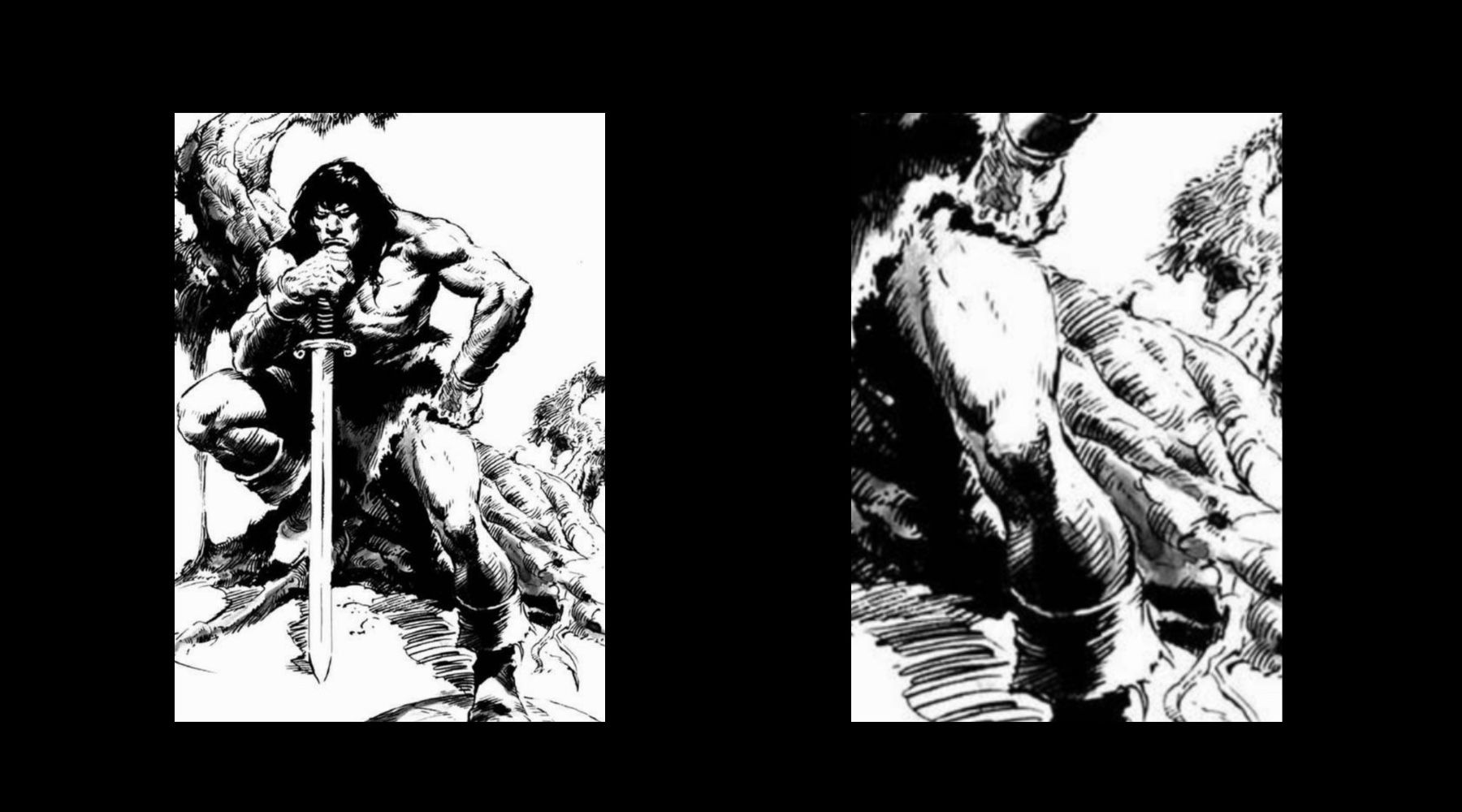
Lines that constrict the form create visual tension.
🐕 When "Texture" Takes Priority
Lines do more than just show form and shadow; they also express "Texture."
When drawing things where texture needs to stand out—like rough stones, human hair, or animal fur—you should prioritize the "grain of the texture" over the grain of the form. Even if a dog's neck is cylindrical, if you only draw smooth curves along that shape, the fur texture will disappear, making it look like a smooth plastic toy. In these areas, you must think about the direction the hair grows first.
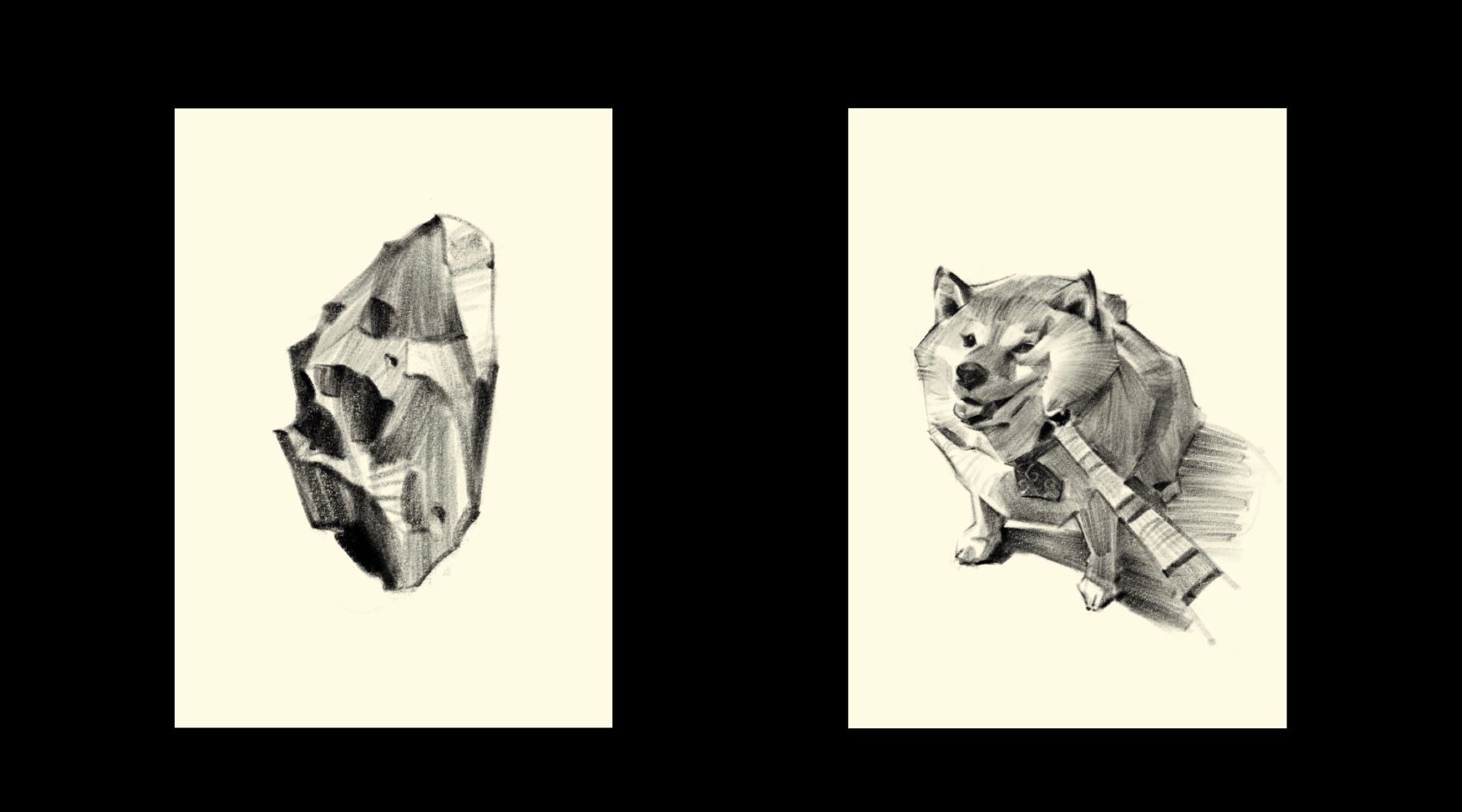
When texture is prominent, the "grain of the texture" must take priority over the form's natural grain.
✍️ Building Your "Carving" Instinct
Now it's time to teach your hands this sensation. Don't try to carve a complex human figure right away; build your difficulty up step by step.
Start with simple objects with a very clear grain, like a cup, a box, or a toilet paper roll. Ask yourself, "If I were carving this cup, which way should I push the knife to make it smooth?" Once you can see this simple grain, move on to objects with irregular and complex curves, like a keychain or an action figure. Don't get lost in the tiny details. Practice reading the "overall big flow" of how your sculptor's knife would smoothly ride over those bumps. Finally, move on to organic forms (people/animals) and try to capture both the structure and the texture at the same time.
Remember, you are not just filling empty spaces on a piece of paper—you are sculpting a solid 3D form!
Keep drawing,
Brooks
P.S. Are you struggling with specific line techniques or structuring the human body? Reply directly to this email or reach out to [email protected] and let me know. I'd love to cover your struggles in a future newsletter!