- Drawings by Brooks Kim
- Posts
- Drawing Note: Thumbnail Sketches for Economy of Line
Drawing Note: Thumbnail Sketches for Economy of Line
Finding the Essence in Small Frames

brooks kim
September 23, 2025
In the last note, I wrote about “The Economy of Line” —
using fewer lines, yet carrying more meaning.
This week, I’d like to share a way to train that economy in practice:
thumbnail sketches.
Key points for thumbnail sketches
Fix the canvas size
Work within a small, limited frame.
A smaller canvas strips away detail and forces structure to emerge.View from a distance
Shrink the image and look as if from far away — only the essential shapes remain.Simplify the line
Try using only straight lines.
It’s a way to read tilts and forms objectively, without distraction.Keep the brush size fixed
Don’t switch brushes. Push expression as far as you can within one size.
This naturally sharpens your sense of line economy.Don’t rush
I don’t set time limits for myself.
Instead, I slow down, think carefully, and look for the core of the scene —
deciding what to keep, and what to leave out.
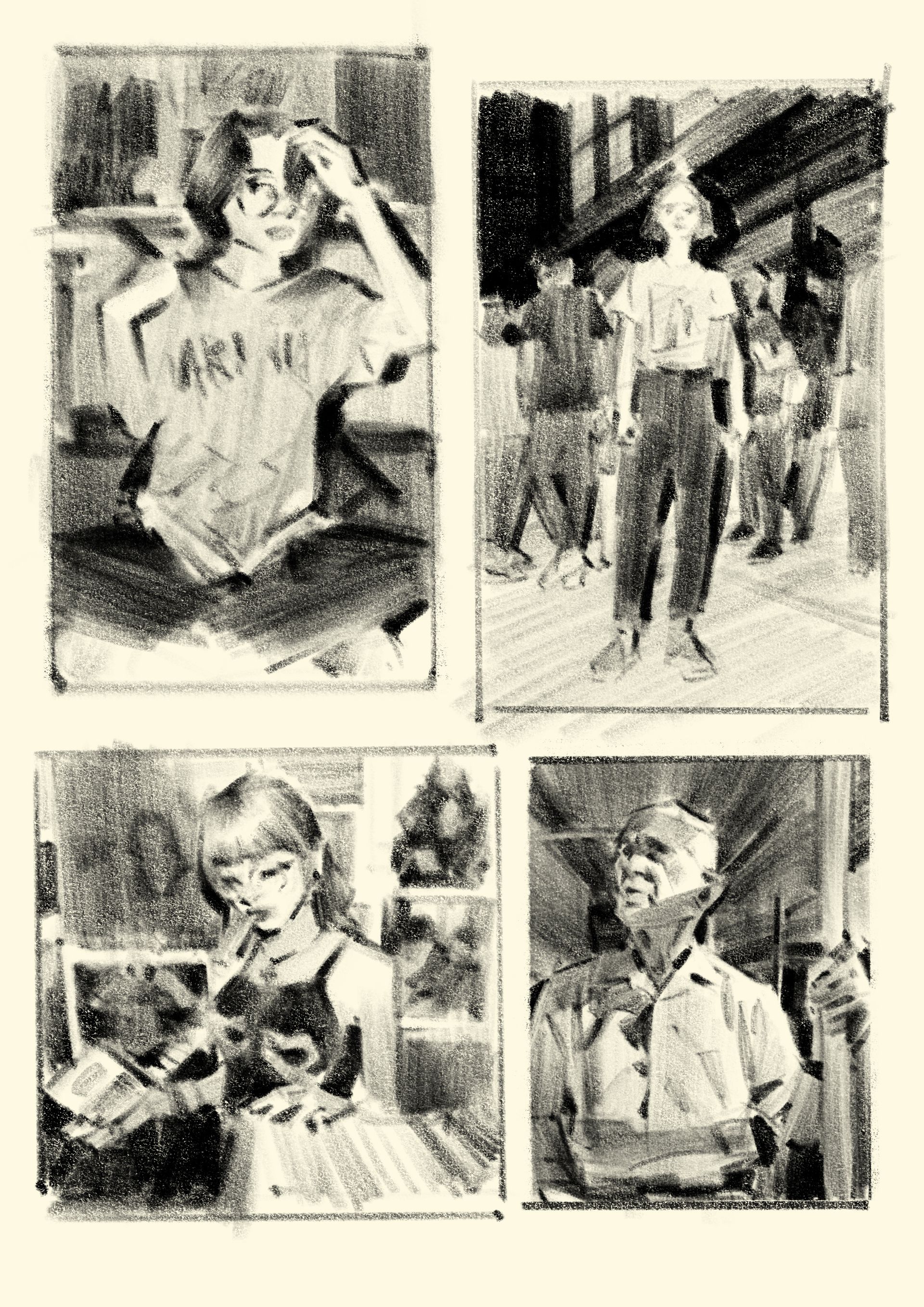
Examples of thumbnail sketches — reducing scenes to structure, composition, and light flow.
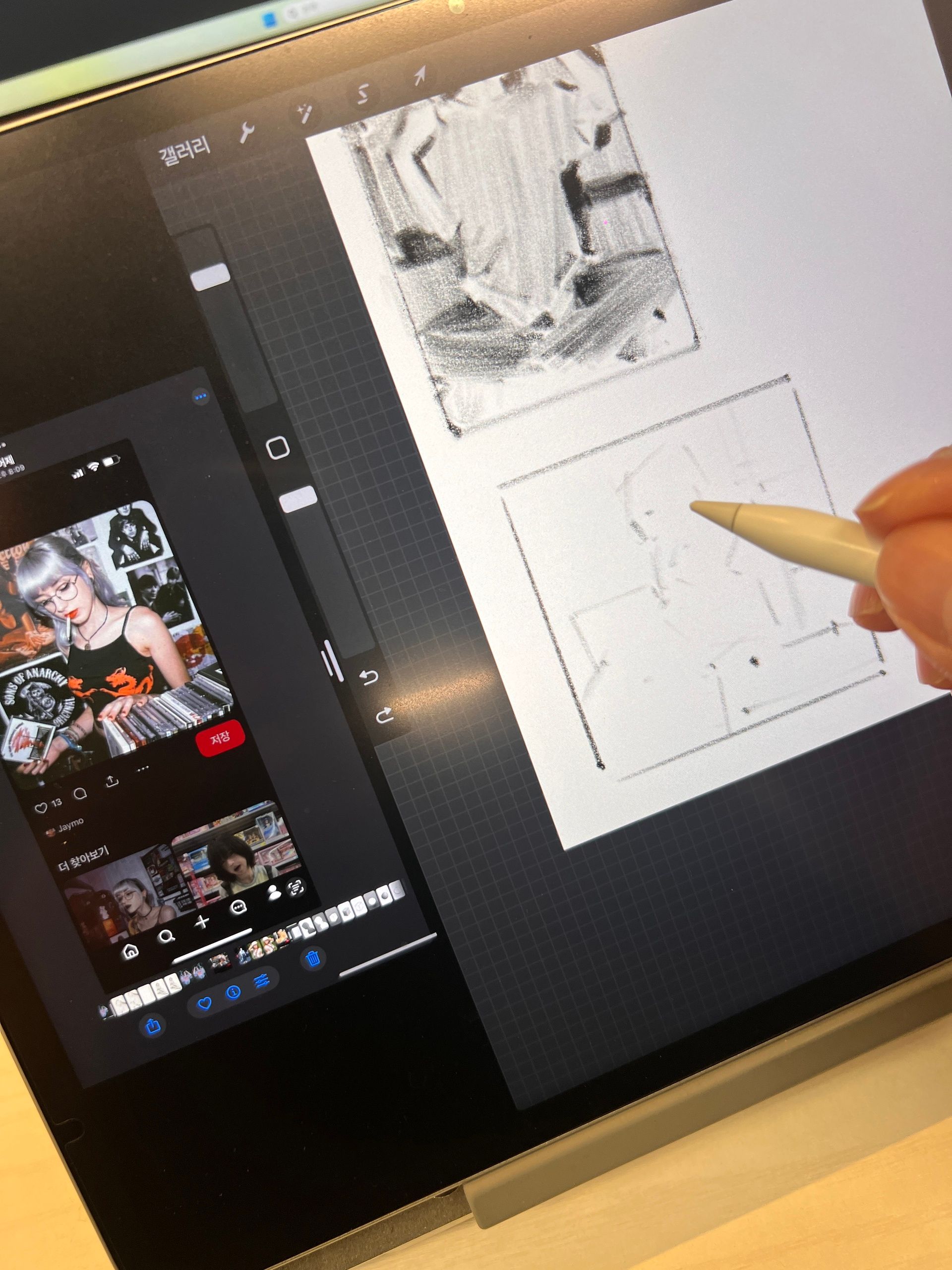
Working small — capturing only the essentials in a limited frame.
A thumbnail isn’t just a small drawing.
It’s a way to train judgment — in line, value, and composition.
And the deliberate choices you make at this scale
become confidence on the larger canvas.
Try it yourself
Make a few thumbnails of your own,
and notice how you choose to simplify what you see.
I’d love to see what you come up with.
I’m posting daily sketches on Threads,
so feel free to share yours there too.
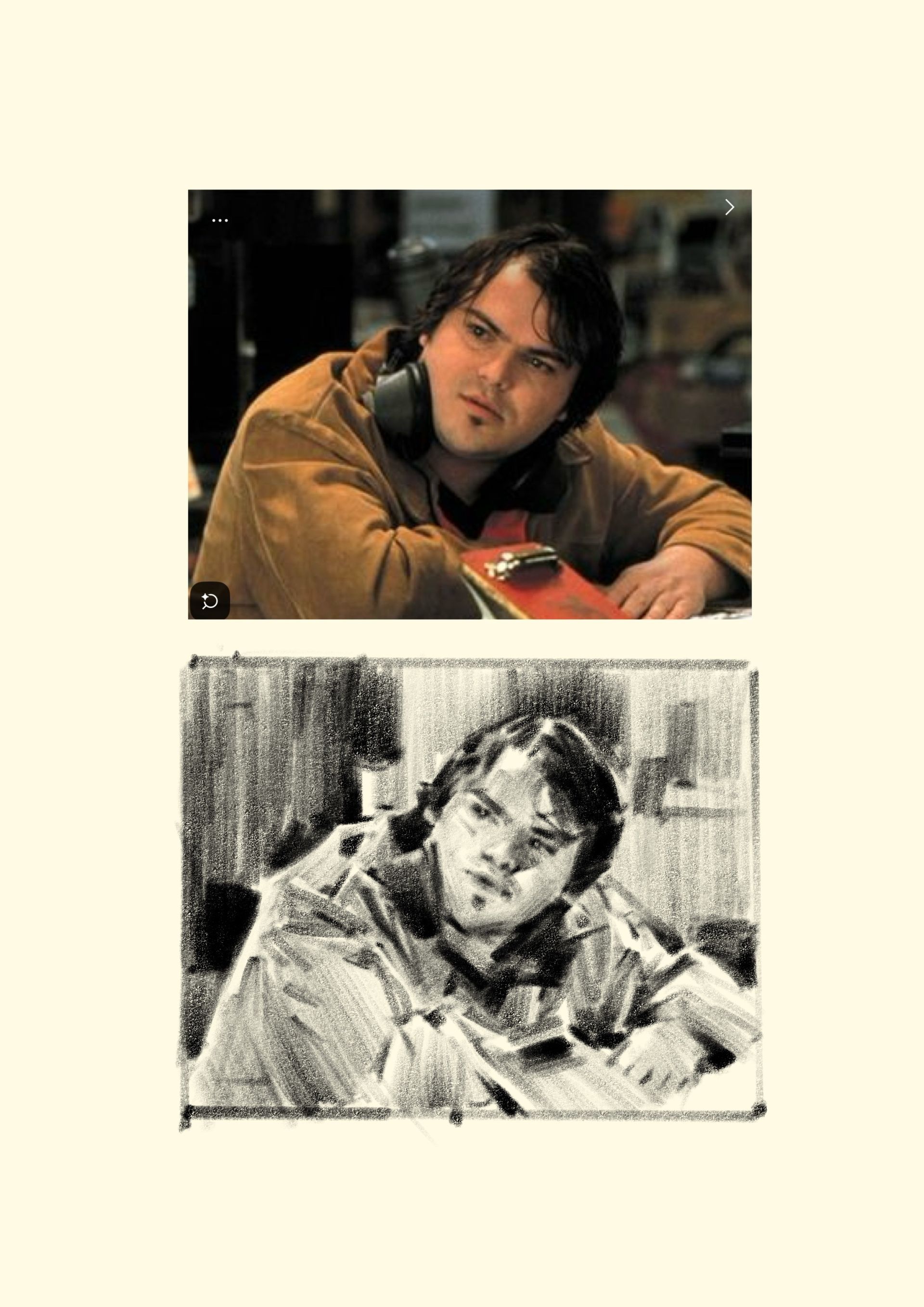
See you next time.
— Brooks